The Beauty of The 1x3 Panorama
Seeing the actual stitched pano render in Lightroom for the first time reminded me of my early days in photography, developing film and exposing that first print in the darkroom.
Seven years ago, I traveled to Paris for the first time on a work trip. Going into it, I knew my time would be monopolized by meetings and commuting. Any photography would be purely opportunistic, so I wanted to travel as light as possible: one camera and one lens – the Sony A7R II and the Sony Zeiss 55mm f/1.8 was all I'd be taking.
Featured Gear
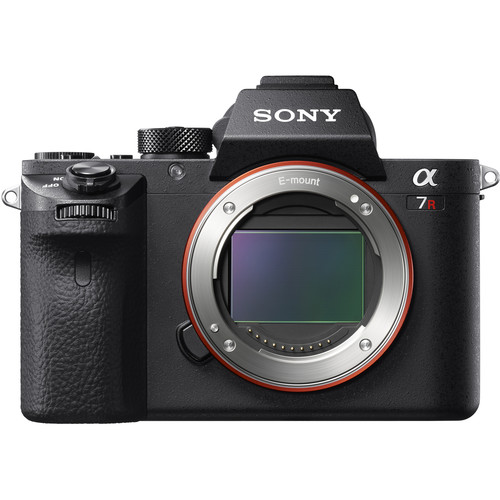
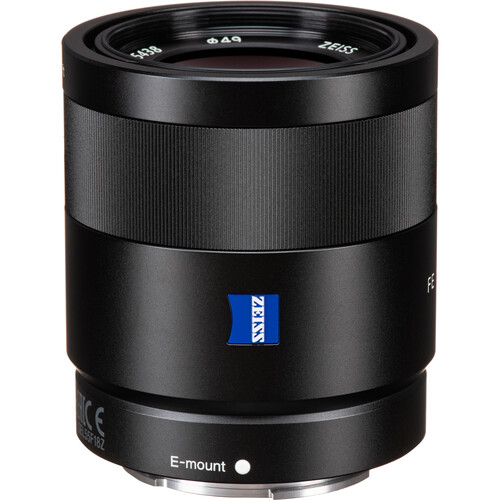
The Zeiss 55mm is one of my all-time favorite lenses in the Sony ecosystem – it's incredibly sharp, fast enough for all conditions, sits in a tiny form factor, and carries some nostalgia as the first sony lens I bought. It is not, however, fantastic as a standalone travel lens. 55mm is tight and the wide end at f/1.8 really encourages you to use shallow depth of field as a composition crutch.
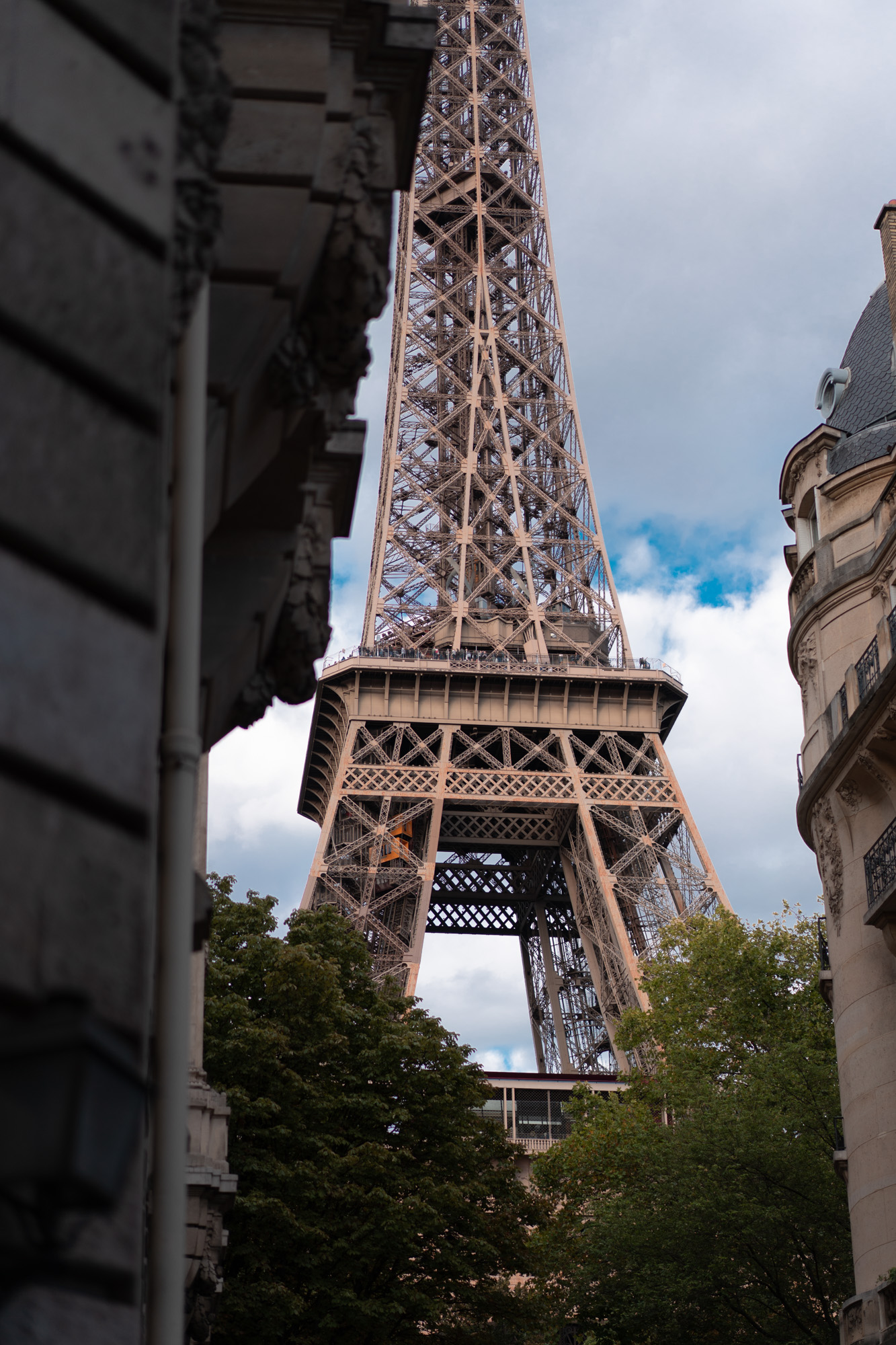
It's what I had, though, so I made the best of it. On the one and only evening I had to myself, I of course headed out to explore the city with my camera. Here are some snapshots from that walk. Obviously the tower kept drawing my eye as a first-time visitor and the one thing you'll notice missing from each frame: a wide environmental view.
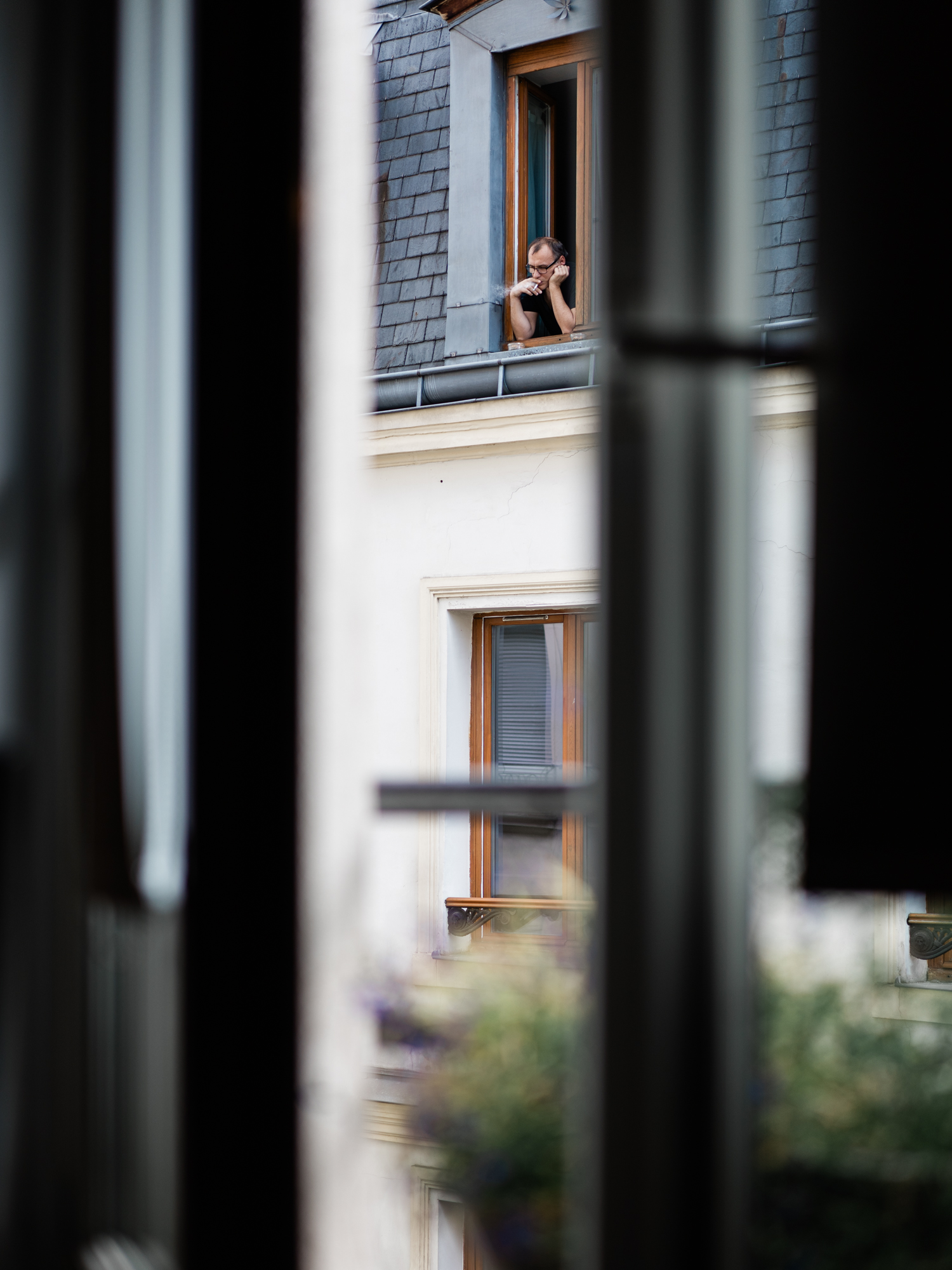
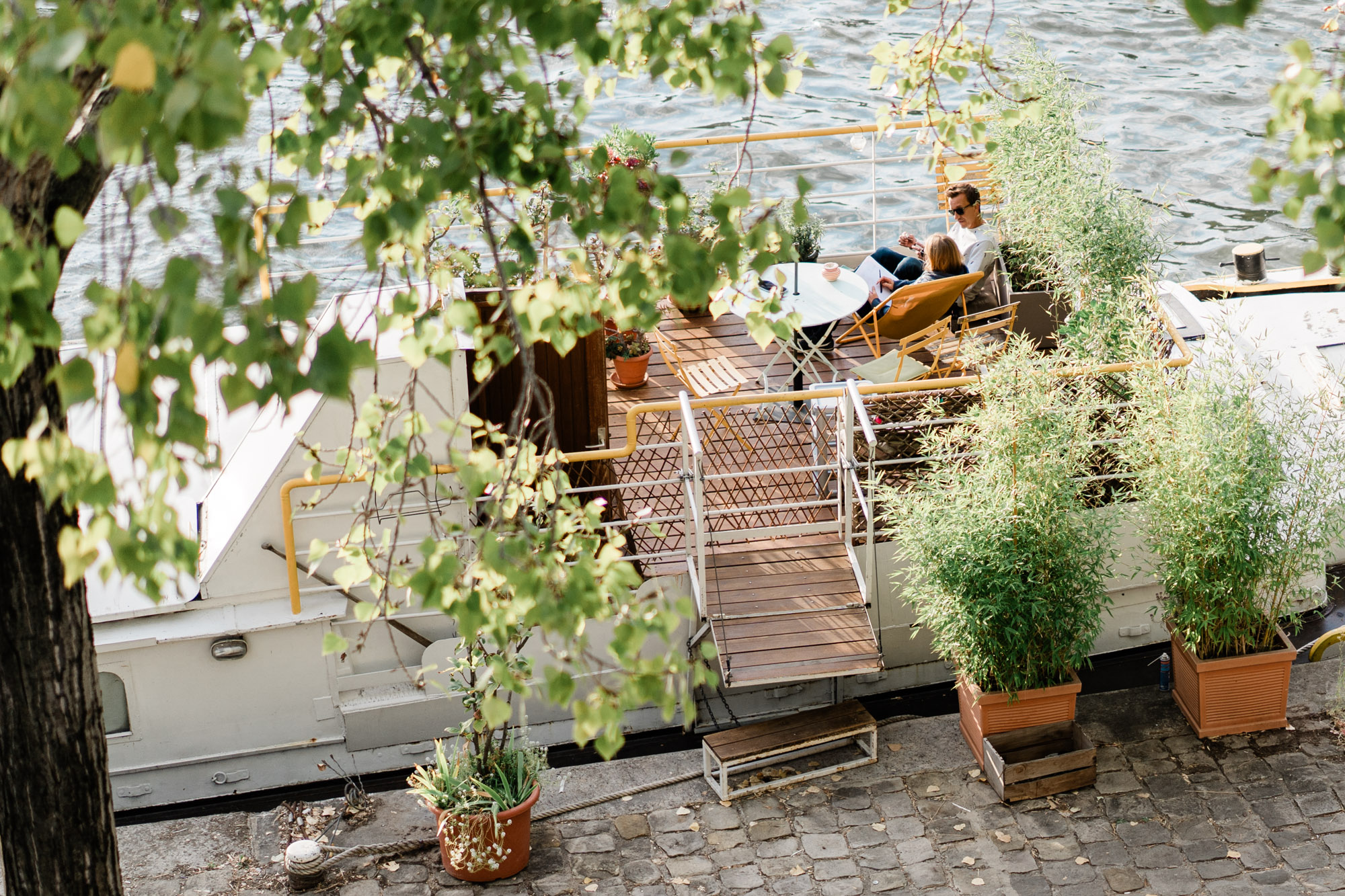
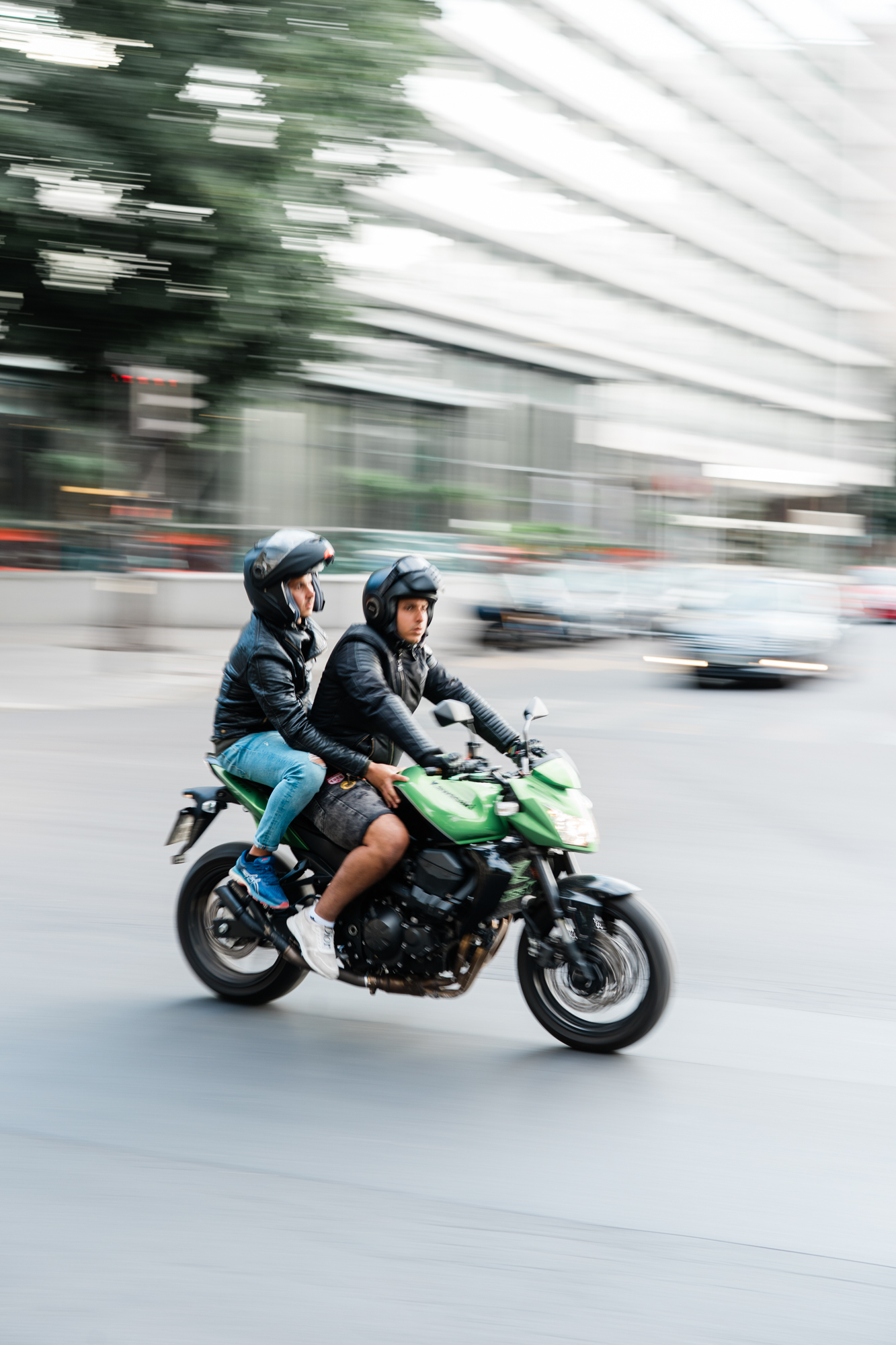
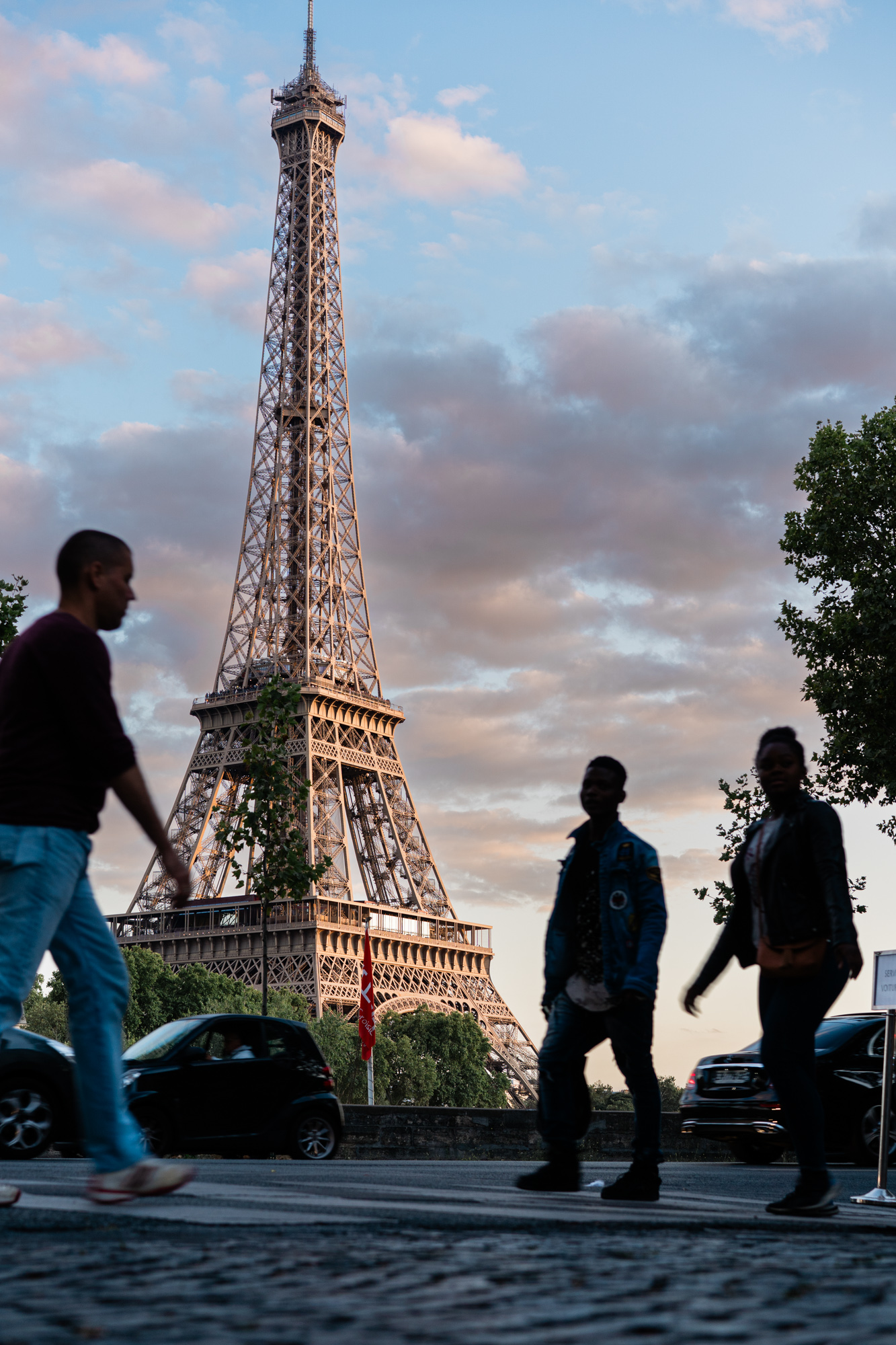
I found myself on the Passerelle Debilly with a great view of the Seine and the Eiffel Tower as sunset started to really kick off. That's the pedestrian bridge where everyone attaches padlocks to the railing. A single frame from this perspective was really just barely enough to capture the tower and I was kicking myself for not bringing a wider lens.
Now, I must've had some concept that shooting panoramas was possible with multiple frames, but I don't recall ever attempting one before this. With light fading quickly, though, I decided to give it a try and the resulting image was my favorite of the trip.
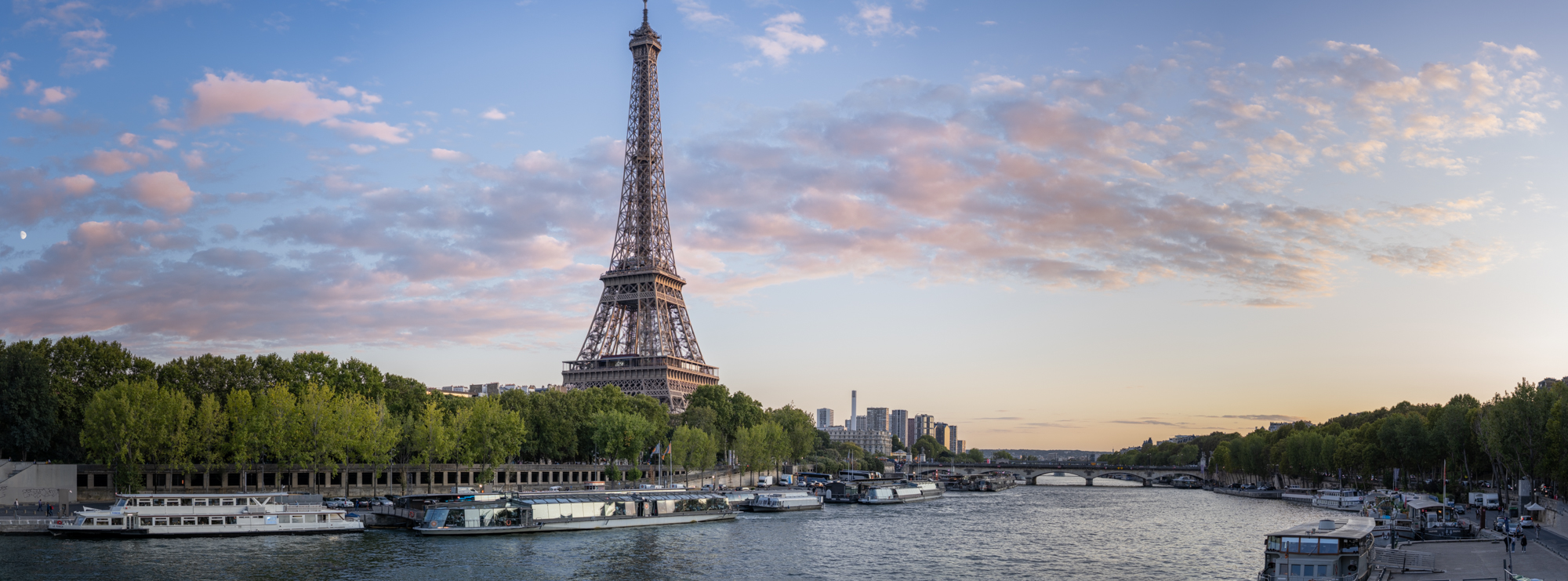
Seeing the actual stitched pano render in Lightroom for the first time reminded me of my early days in photography, developing film and exposing that first print in the darkroom. Delayed gratification aside, I love photography's ability to reveal things you normally wouldn't catch with the naked eye. Freezing fast motion, rendering extreme detail in macro shots, or capturing an entire 100+ megapixel massive scene... this pano in Paris really set me down the path of further exploring the format.
And in the years since, there are more situations in which I've learned to use the pano and even more elements I've come to love about panoramic images.
There's Always a Pano Shot
I'm convinced that when you're stood before any photographic scene, there is always a decent panoramic composition to be found. Landscape, nature and travel photography are all really difficult genres, especially if you're shooting at wide focal lengths. Balancing fore, mid and background elements is not a natural skill for most people and visually connecting them so the viewers' eyes flow through the scene is even harder.
When a scene is too busy or unbalanced, a reasonable technique is to punch in. Zoom in on some element that tightens your frame and simplifies things. Sometimes doing this, though, oversimplifies and causes the top and bottom of the frame to feel empty.
Keeping the same focal length and compression while opening the scene laterally can add context that engages the viewer more effectively and gives them room to breath and move throughout the composition.
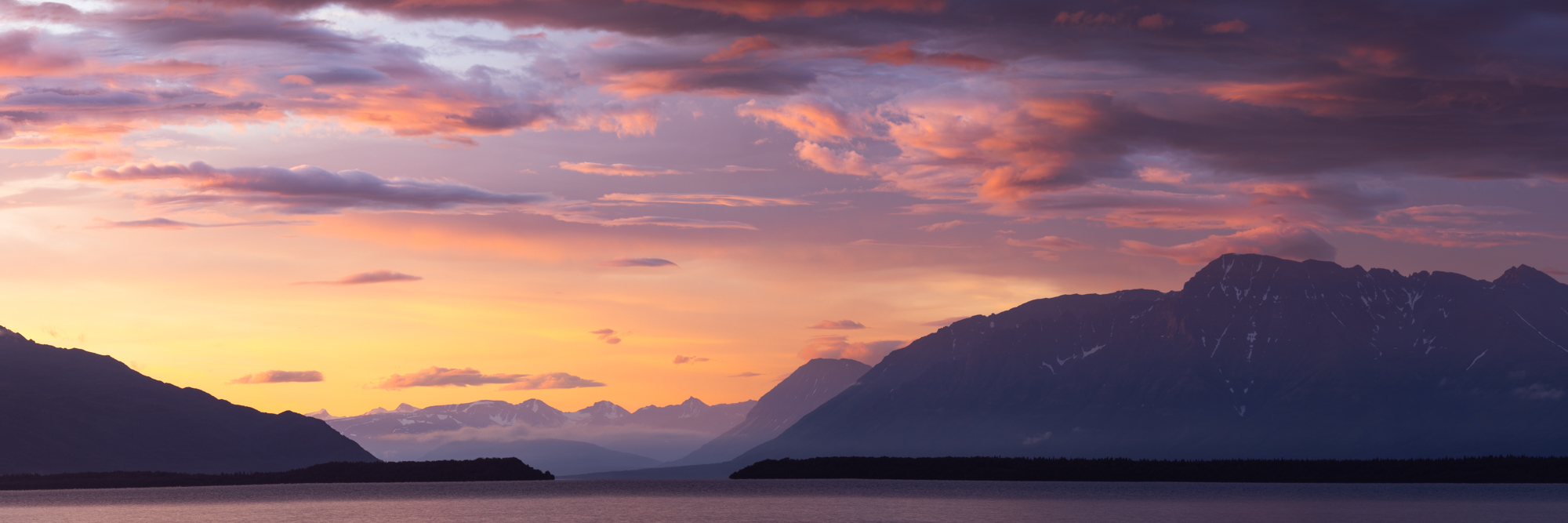
Take this morning on Naknek Lake, looking southeast toward the pass into the Iliuk Arm. There was really not much foreground interest on the beach and the distance across the lake placed the distant mountains seemingly on the same plane. It just kind of felt flat.
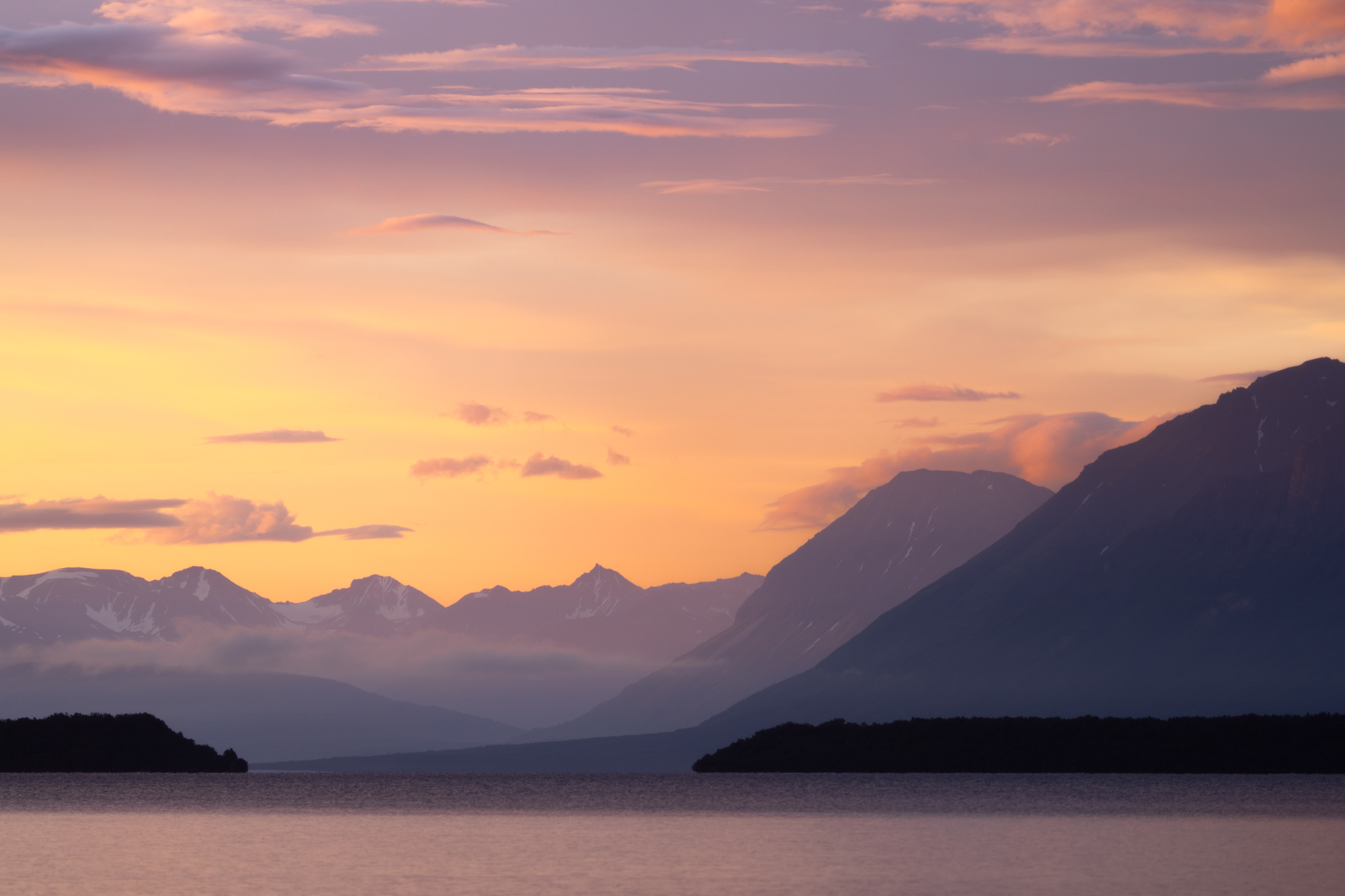
The sunrise stretched dramatically in all directions, though, and the gradient in the skies further south could add a lot of needed depth. Rotating the camera 90º at the same focal length gave the sky more prominence in the frame without shrinking the mountains. And then manually exposing for the highlights in the northeast set a repeatable shot that I could work left to right. This is the result.
Often It's Obvious
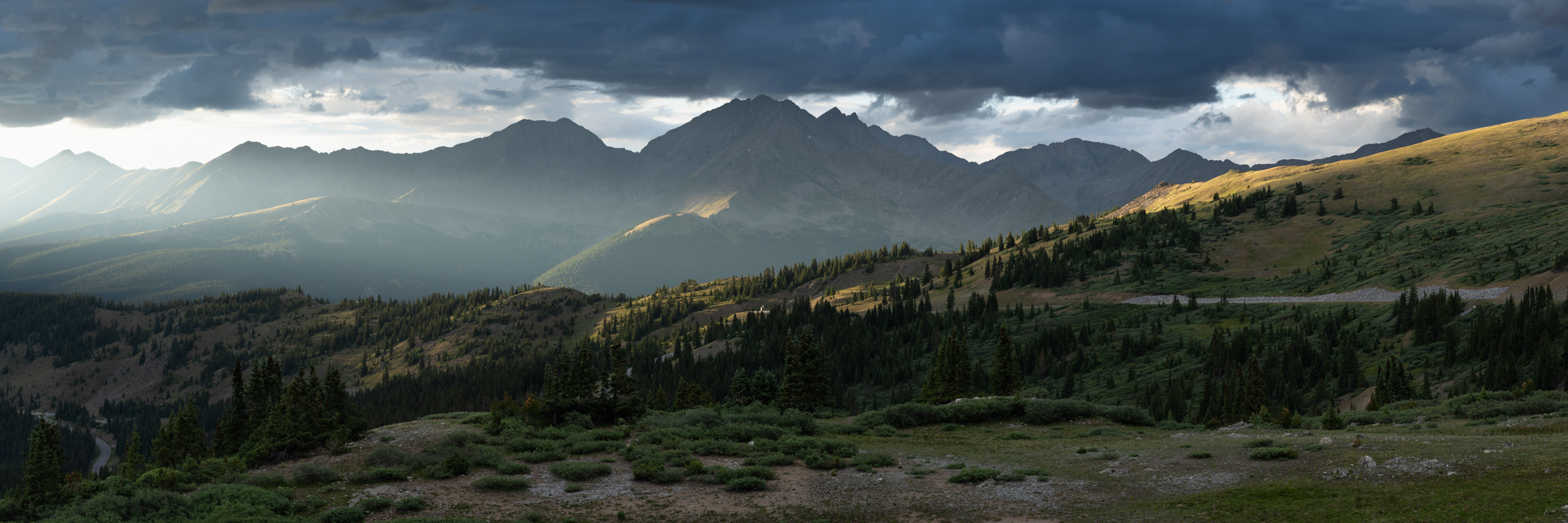
Sometimes, the scene before you just begs for a panoramic framing. A tidewater glacier, low Sedona mountains with a fresh dusting of snow, late evening light casting horizontally along the Collegiates.
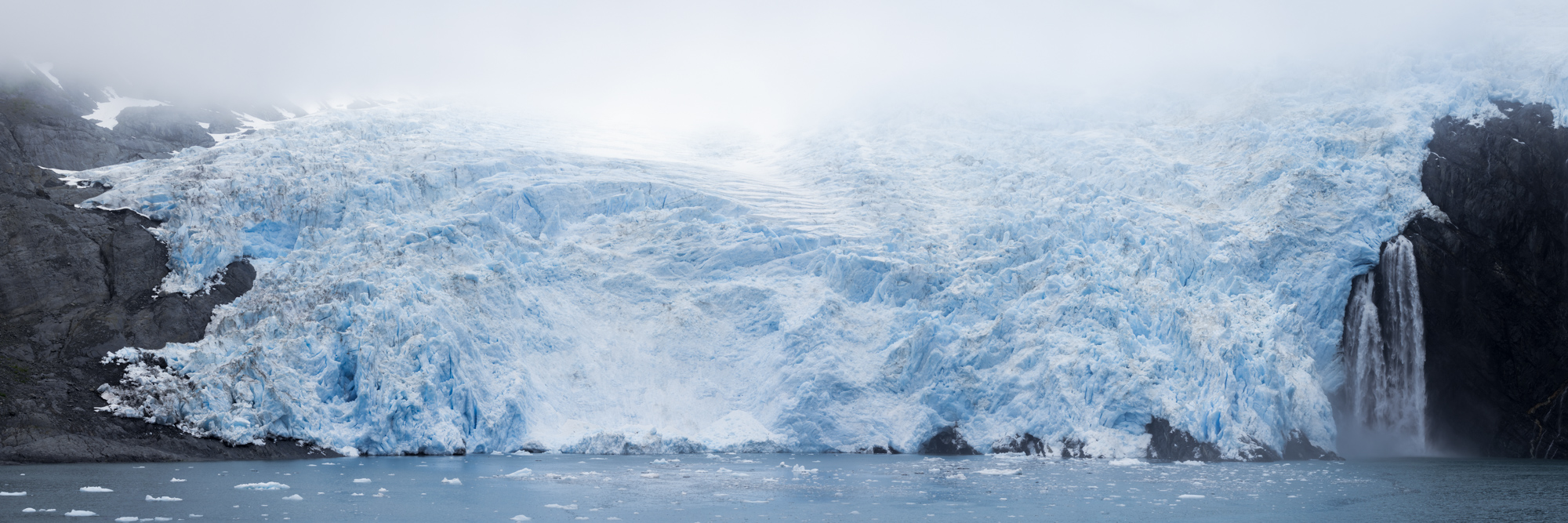
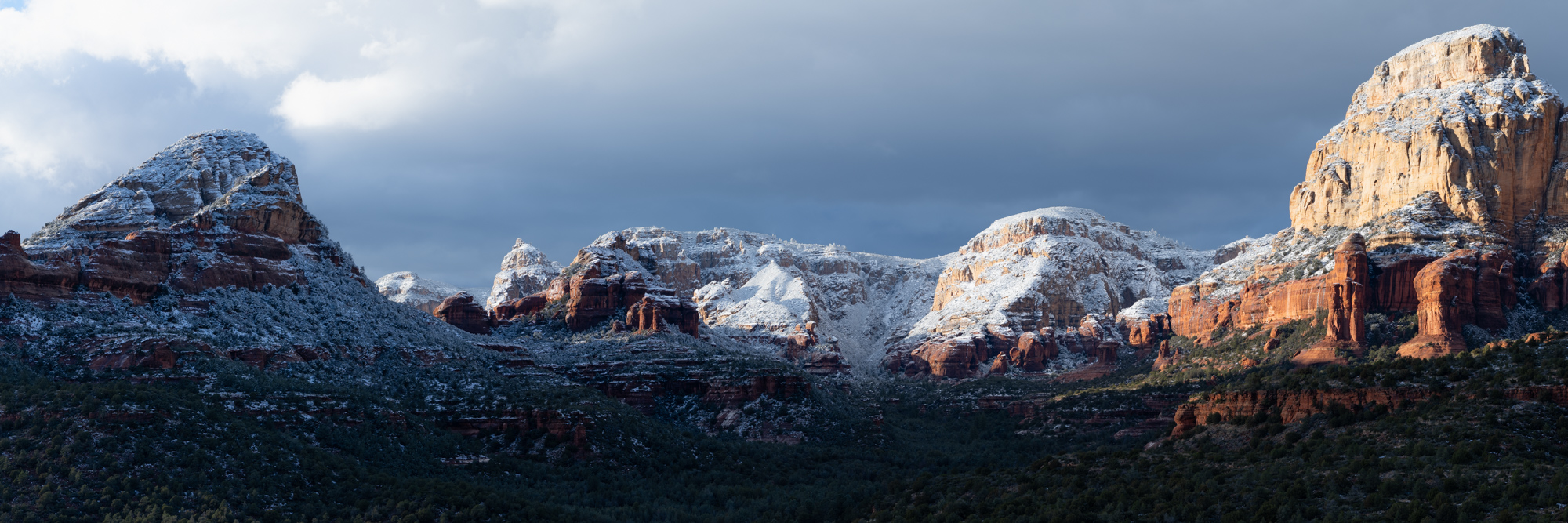
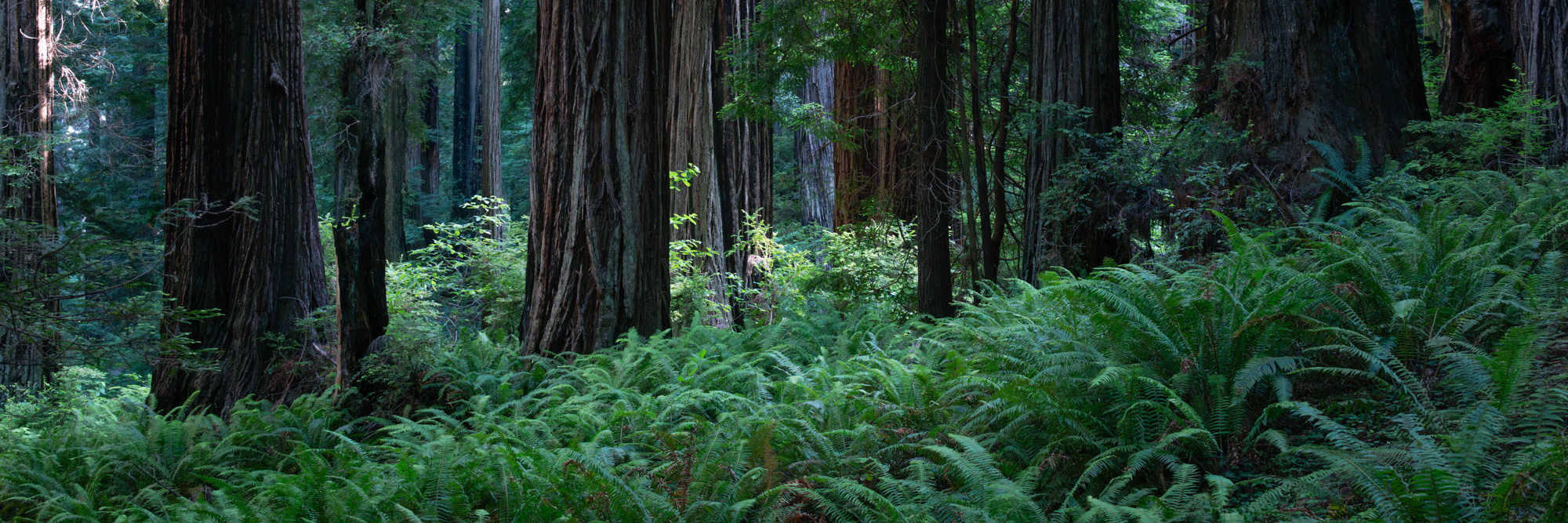
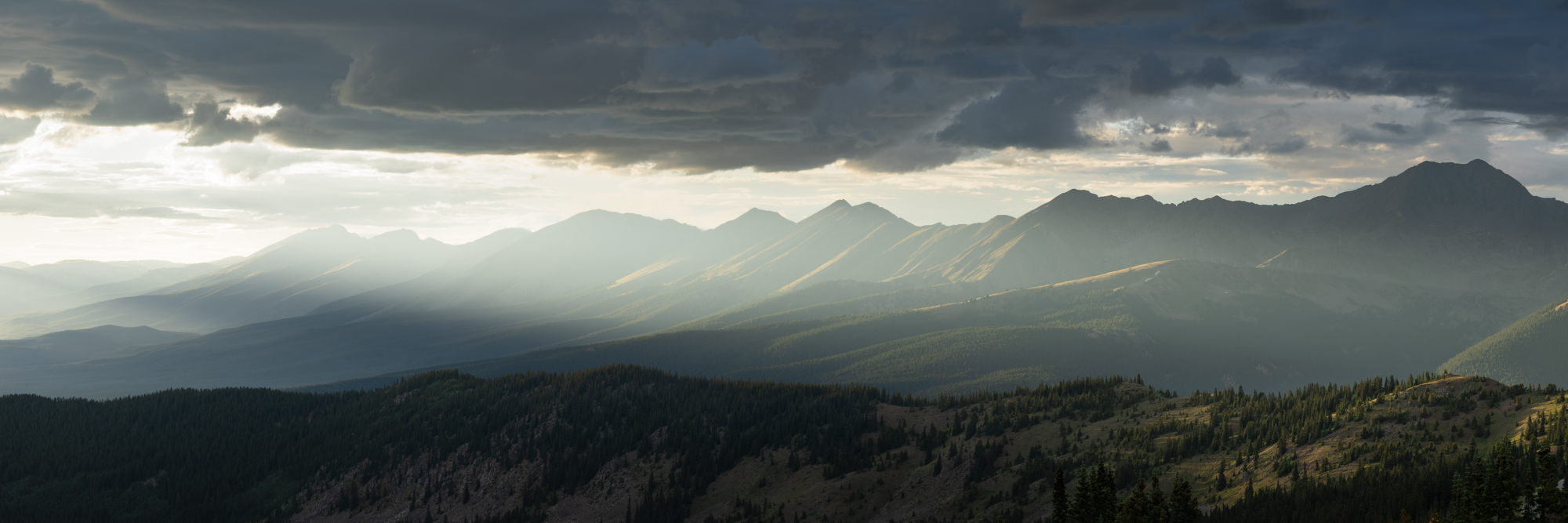
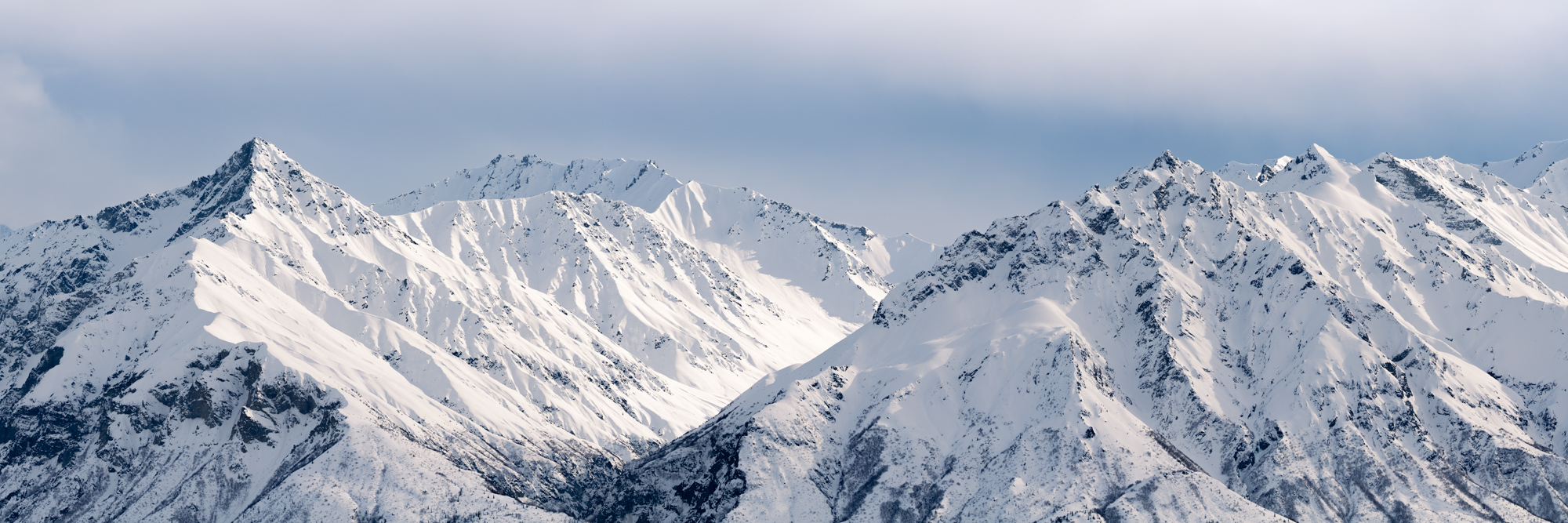
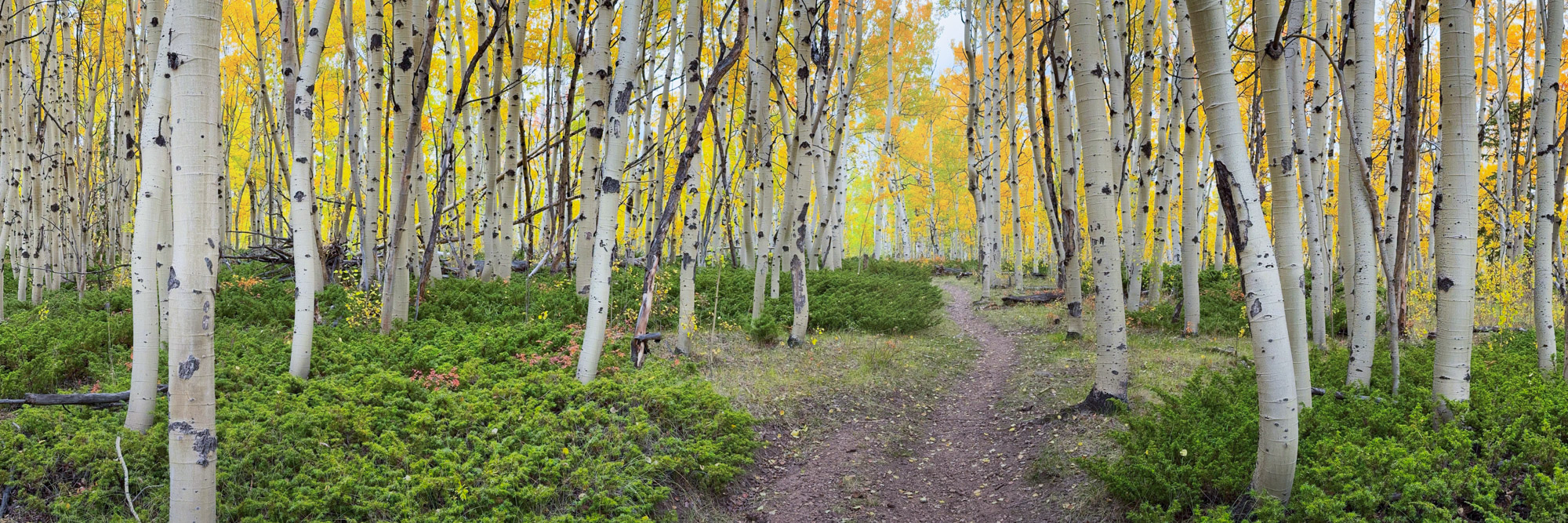
Each of these frames pulls me back to the feeling of being in that place. And each of them was taken from a vantage point that otherwise wouldn't have presented a good photo if shot in a traditional aspect ratio. Simply having the pano option in the back of my head, though, inspires me to pull out the camera more often than not.
Beyond that, there are real, tangible benefits to be had with panos.
The files are huge. I'll often shoot two extremely wide panos, one on top of the other, to give myself the most resolution to work from. It's not uncommon to pull a 100+ megapixel 1x3 frame from a raw image that's over 300 megapixels.
This format really doesn't lend itself to social media, and that's a good thing. Sure, you can post a pano as a carousel for people to quickly swipe through, but where they really shine is in large format, viewed in person alongside the photographer.
To get an image into this large format, you obviously need to print it. And photo printers are not cheap. A panorama allows a relatively consumer-grade printer like the Canon Pro 1000 to punch above its weight. It's normal paper size (17x25") makes for a big print, but it's also possible to buy printer paper on a roll and a 17x51" print is legitimately big.
It Changes How You See
What I value most though is what shooting panos does to your eye over time. Most of us are trained to see in two boxes, you pick up the camera and your brain decides right away whether a scene is a landscape or a portrait. The pano breaks that habit. Once you start looking for them you stop seeing the frame as a fixed box and start seeing the scene in its entirety.
My goal is always to create an image that most closely gives the viewer the feeling of what it was like to be there. Super-wide-angle images are interesting, but they distort reality. Tight, telephoto shots can reveal unseen details, but they exclude context. Panoramas use focal lengths that render the world as our eyes perceive it and contextually put you in another place.
Give it a shot next time you head out with your camera. Don't worry about special gear or even really technique all that much. Just lock down your exposure settings and start shooting overlapping images. I almost always do this handheld and let the editor take care of the rest.
Happy shooting.
More from the Journal
Photographing Humpback Whales in Monterey Bay
A Month in Hawaii with The Ricoh GR IIIx
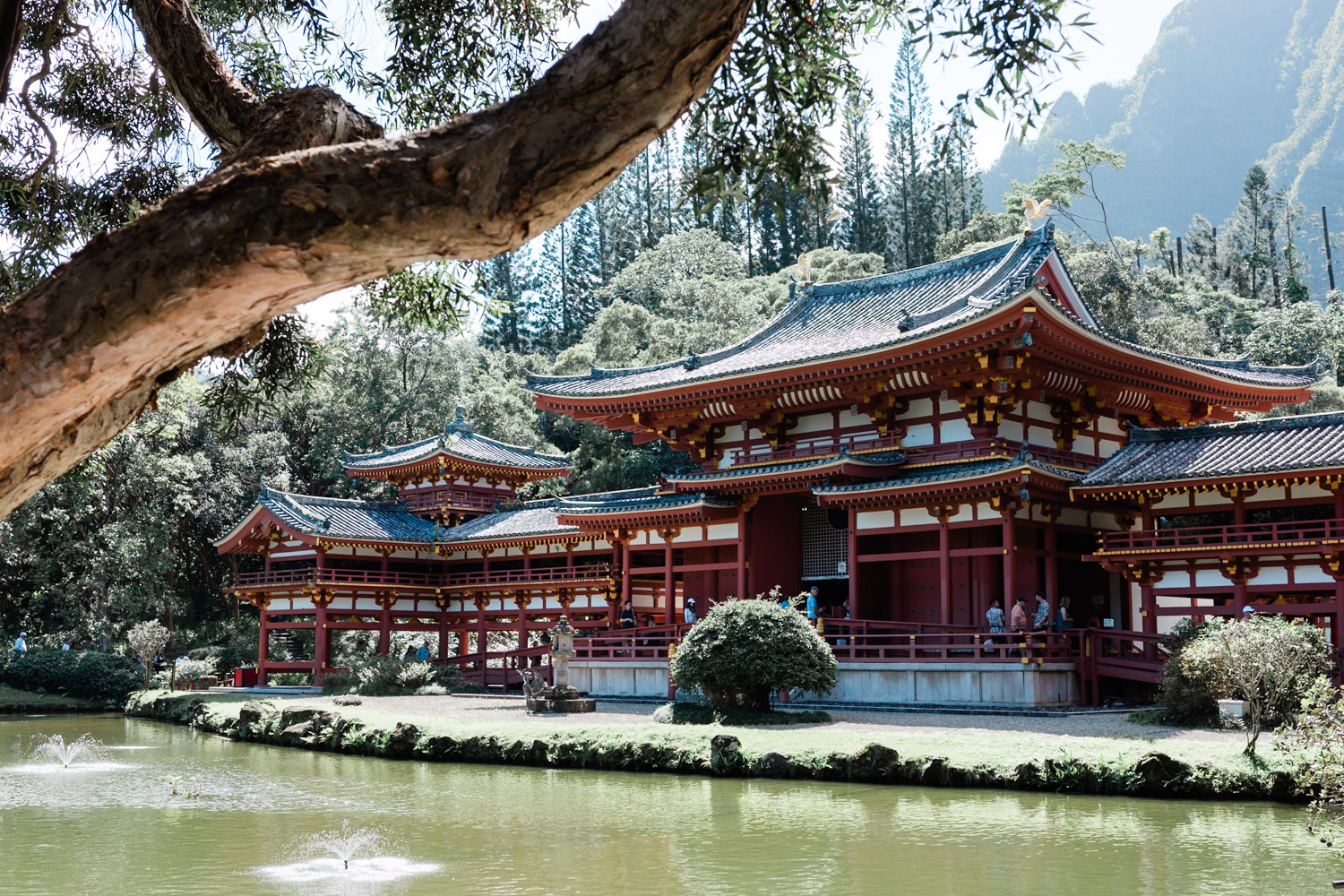
Picking up what's effectively a point and shoot for the first time in 15 years felt... unnatural. I had to watch a lot of setup videos to find a combination of settings that worked for me on the Ricoh. But, after getting things dialed in, I actually enjoyed the shooting experience very much.
Riding Shotgun on The Arkansas
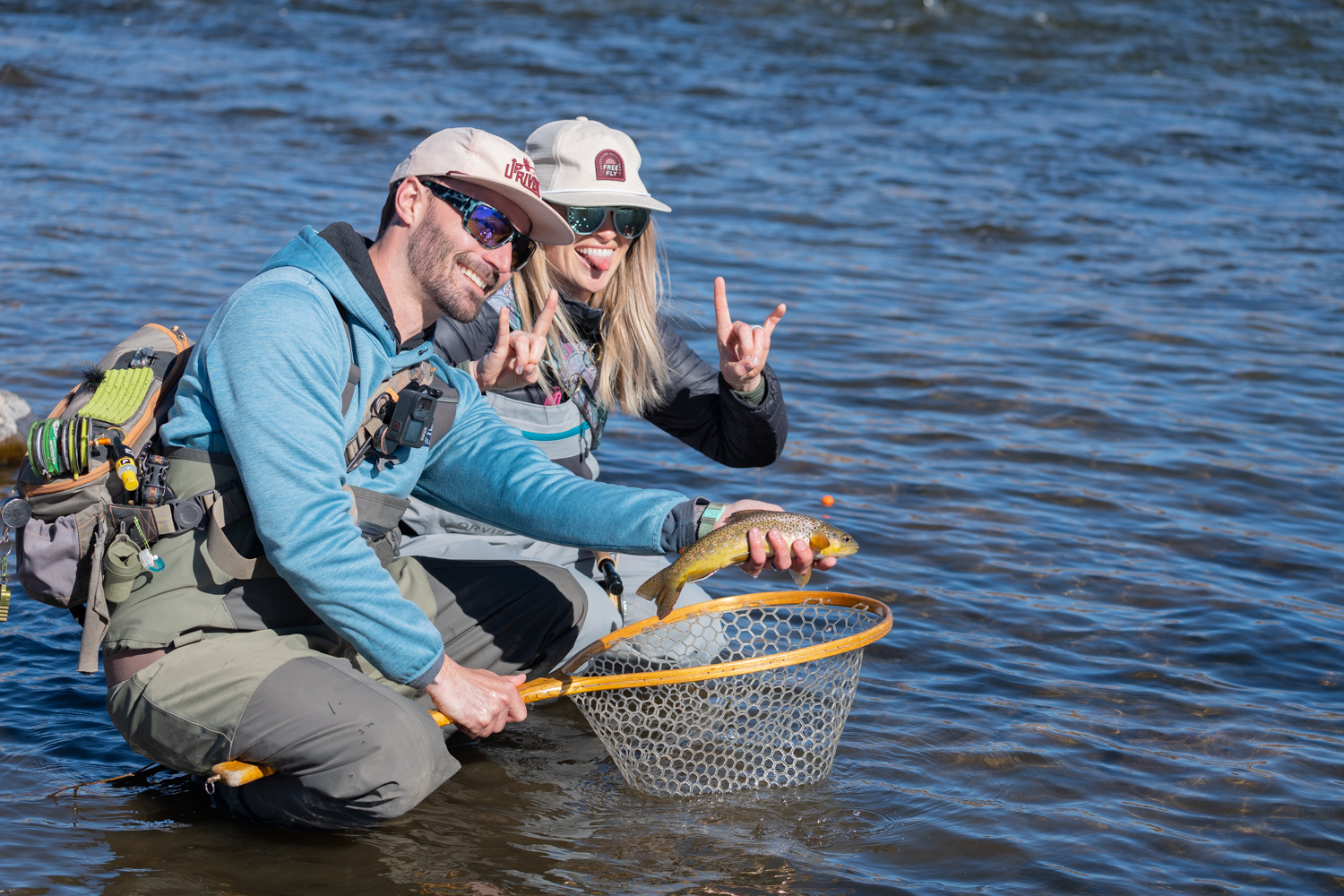
In these parts, the river is an ecological treasure and draws visitors from all over for world-class paddling and, possibly even more exceptional, the fly fishing. The Upper Arkansas that flows from Leadville south to Parkdale boasts over 100 miles of gold medal trout waters, the longest stretch in North America.
Comments
Sign in to leave a comment.
Loading comments...